Spatial Education: How do children teach us to create monkey groves?
21.03.2025Kids show us the way – this is not only our motto, but also the philosophy that guides us in designing playgrounds. Our structures are created with children in mind, and they are our guides. It is their needs, ideas, and ways of playing that inspire us to create zones that engage them in hours of developmental activity. How does spatial education inspire us, and why is play space crucial for children’s development? You will find out by reading on.
What is spatial education?
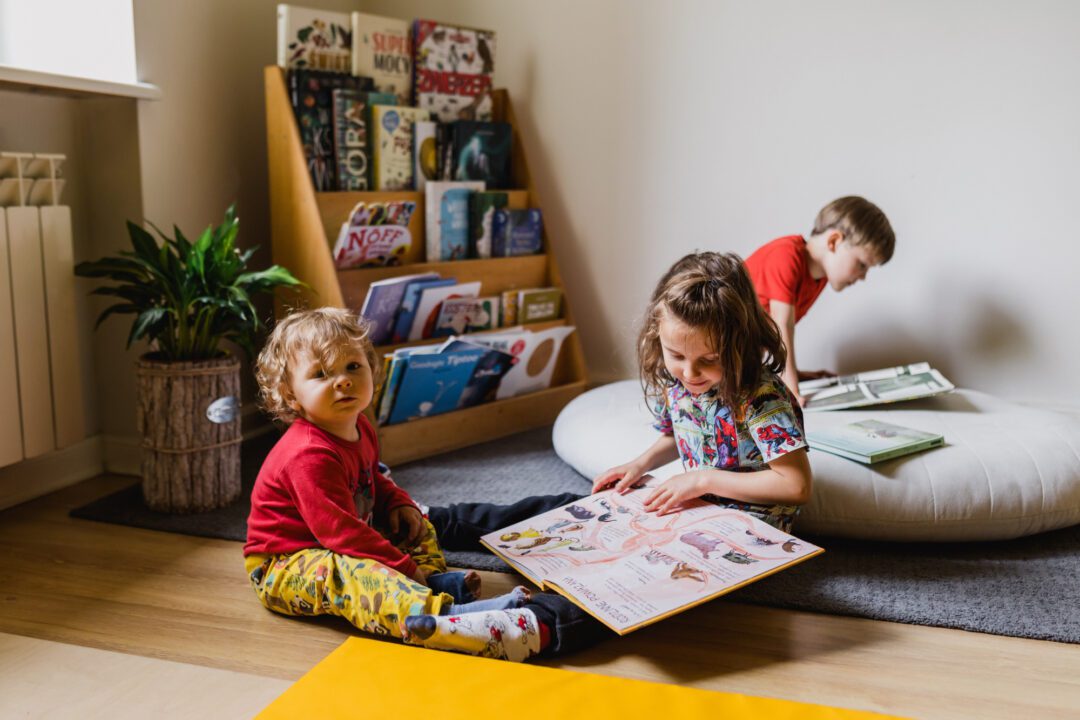
Spatial education is an approach that assumes that shaping the environment has a huge impact on a child’s cognitive, emotional, and physical development. The space in which they move, explore, and build their own worlds develops their spatial abilities, creativity, and social skills. A properly designed play area encourages interaction, taking on challenges, and building relationships with other children.
How does our approach fit into spatial education?
Our monkey bars are not only a place to play, but above all a space that teaches through experience. In the design process, we do not impose rigid play patterns on children – instead, we observe how they use the space and what they need to develop on many levels.
That is why we create places that support spatial education through:
- Sensory stimulation – different textures, heights, and shapes teach a child’s body to respond to stimuli from the environment, helping to develop spatial imagination and perception.
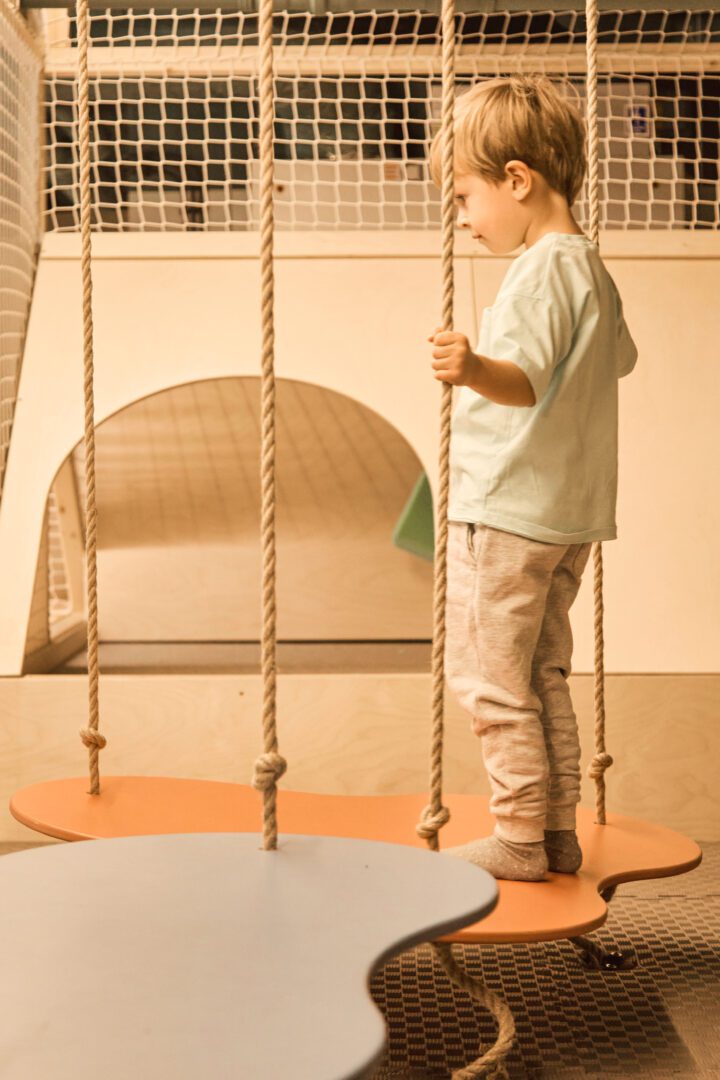
- Motor skill development – climbing, jumping, and balancing help improve motor coordination and strengthen muscles, which translates into better spatial awareness.
- Creative exploration – children give meaning to space themselves, create their own play scenarios, and learn spatial thinking through experimentation.
- Cooperation and interaction – we design monkey bars to encourage children to play together, which supports the development of communication skills, spatial awareness, and teamwork.
What can children teach us about design?
Observing children playing naturally is the most valuable lesson for us. We see how their curiosity and need for movement determine how they use space. We see that:
- Simplicity inspires – children can turn an ordinary wooden beam into a pirate ship or a bridge to a mysterious castle.
- Variability is key – spaces that allow for different ways of interacting are used longer and in more creative ways.
- No rigid rules means freedom – we give children the opportunity to explore on their own, rather than imposing ways of playing.
We know that children’s boundless imagination sometimes leads to ideas that take their parents’ breath away. That is why we firmly believe that free and unrestricted play (without constant parental supervision) is an opportunity for children to build self-confidence. Therefore, the most important element of design for us is ensuring safety. Only then can we be sure that free exploration will bring only benefits, and parents will be able to breathe easy. At Small Human Design, we ensure compliance with PN-EN 1176 standards already at the design stage. You can read more about this here.
Spatial education and Montessori
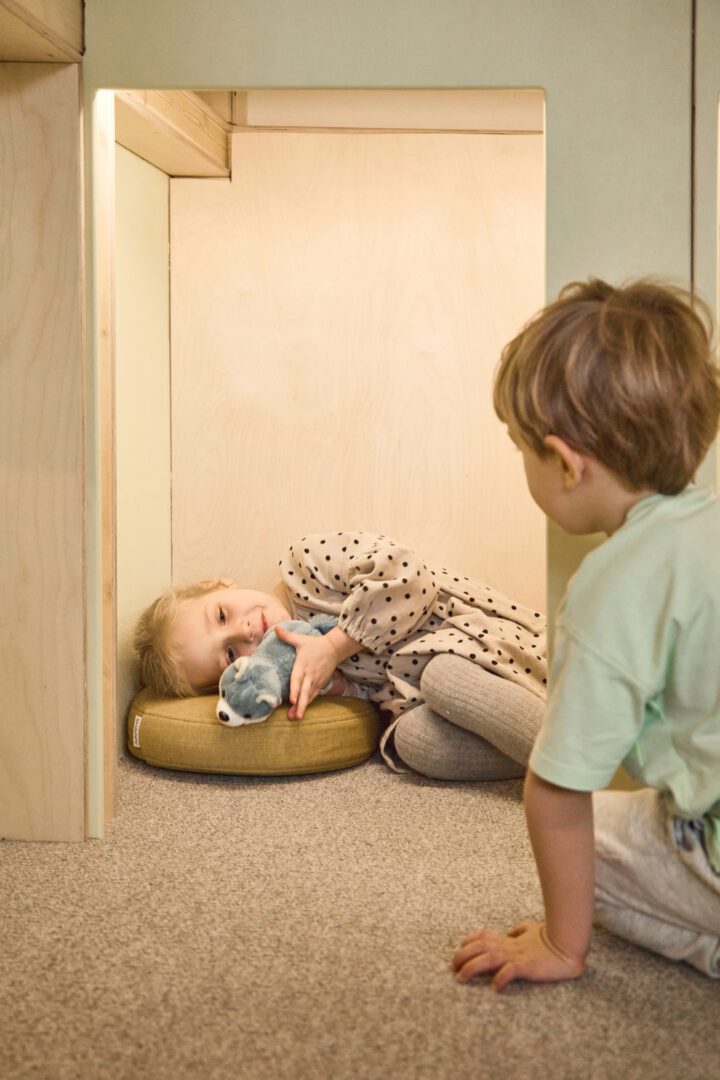
One of the trends that strongly inspires our approach to designing play areas is the Montessori method. It is based on free exploration of the environment and independent discovery of the world by the child. In addition, a key assumption of Montessori is to create a space that supports the motor, emotional, and social development of the child through appropriately selected materials and arrangement of the environment. In our monkey groves, we strive to provide children with similar conditions – stimulating, but at the same time not imposing any patterns of play. Children are free to choose how they want to use the space, which develops their creativity, motor coordination, and ability to make decisions on their own.
Space as a learning tool
Our approach to designing monkey bars is in line with contemporary educational ideas. We are inspired by Spatial Education and the Montessori method, which show how children learn through experiencing space.
Designing a play space is not just about creating safe and aesthetically pleasing places. It is about creating conditions for learning through play, in a natural and unforced way. Our monkey bars are spaces where children discover for themselves how the world can become a field for endless exploration.


