Designing a Playroom – 5 Key Principles of Good Design for Kids
16.04.2025Children do not move like adults – their world is full of little secrets, hidden corners and multiple levels of fun. They spend time crawling, running, climbing and jumping. Therefore, designing a playroom is much more than adjusting the size of furniture to a child’s height. It is about creating a high-quality environment that supports development, responds to their physical needs, and at the same time encourages exploration and creative play.
Since kids spend long hours in play areas – whether in hotels, cafés or spas – the space should not only entertain but also develop key skills and guarantee safety. That is why our natural jungle gyms are built with children’s real needs in mind. This way, kids can learn through play while parents finally relax.
But how to create a playroom that entertains and develops at the same time? What rules should guide designing a playroom to make it perfect for young explorers?
Designing a Playroom – the key to supporting child development
Spatial education teaches us to carefully perceive our surroundings. Clear and well-structured spaces positively affect well-being – regardless of age. For children, however, the environment has an additional meaning: it shapes how they perceive the world. In the first years of life (up to six years old, according to Montessori), children absorb reality with all senses. They build their inner image of the world through interaction with their environment. That is why harmonious and ordered spaces not only calm the senses but also support natural exploration. As Maria Montessori said: “To help a child, we must provide them with an environment which will enable them to develop freely.”
Montessori principles in designing a playroom
In the Montessori approach, space plays a fundamental role. It becomes the field where curiosity grows and where the child becomes an independent explorer. There are three pillars: the prepared environment, the child, and the conscious adult (parent, teacher, or caregiver).
The adult understands the child’s needs and creates an atmosphere of respect. At the same time, the prepared playroom supports development without overstimulation. Together they create a harmonious whole.
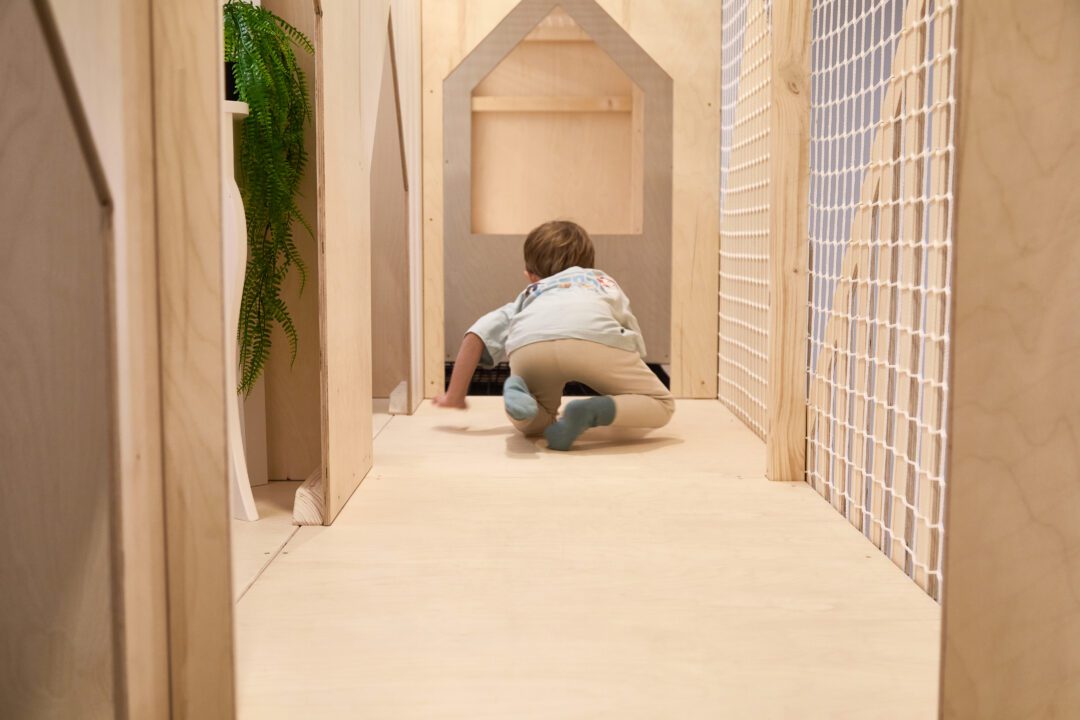
Designing a Playroom with Natural Jungle Gyms – 5 Essential Principles
Although Montessori’s method was created in the previous century, today it is widely applied in children’s spatial education. Its guidelines should be used not only in schools or homes but also in playrooms where kids spend hours of active fun.
- Create a friendly, multi-dimensional space that satisfies curiosity.
- Use natural materials and highlight sensory elements.
- Encourage independence with “open hiding spots”.
- Follow safety norms to ensure peace of mind for kids and parents.
- Stimulate imagination instead of replacing it.
Read more about the most important stages of designing a playroom in our previous article.
1. A friendly, complex and multi-dimensional playroom
Yet this does not mean the playroom should be overly simple. The right level of complexity sparks curiosity and motivates exploration.
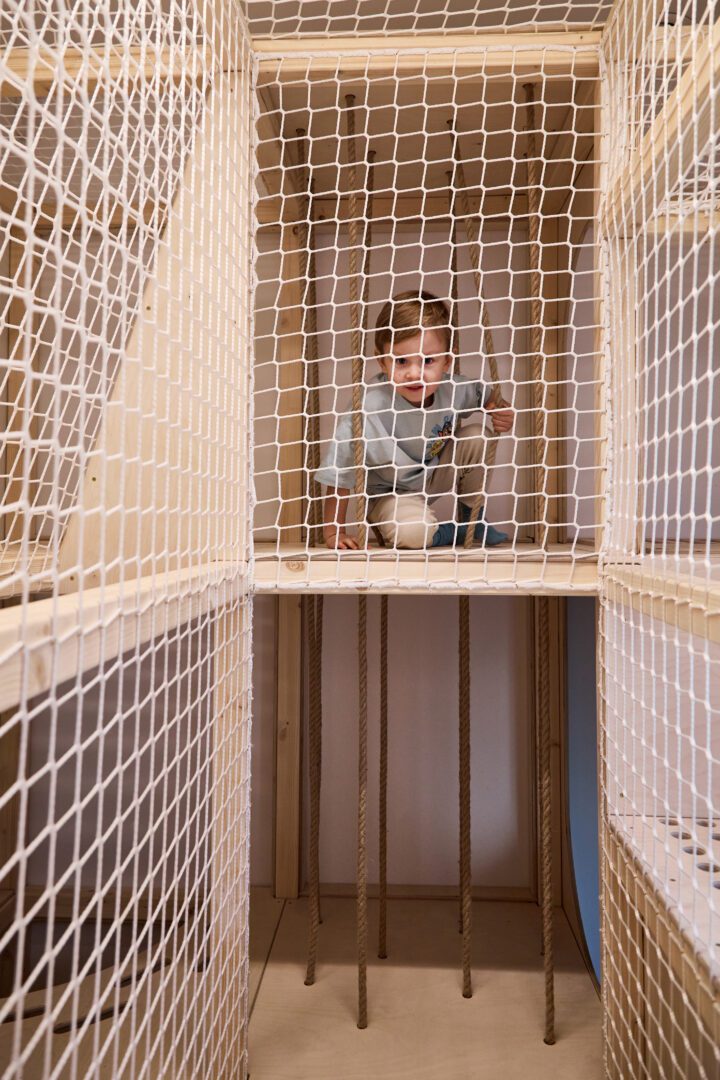
Multi-level designs with stairs, mezzanines and balconies open up perspectives while ensuring comfort and safety. In addition, climbing structures or balance paths answer the needs of motor development.


2. Natural materials and sensory values
Choosing materials is not only about looks and durability. It also supports sensory growth. Children explore the world through touch and sight – rough, smooth or textured surfaces naturally engage senses.
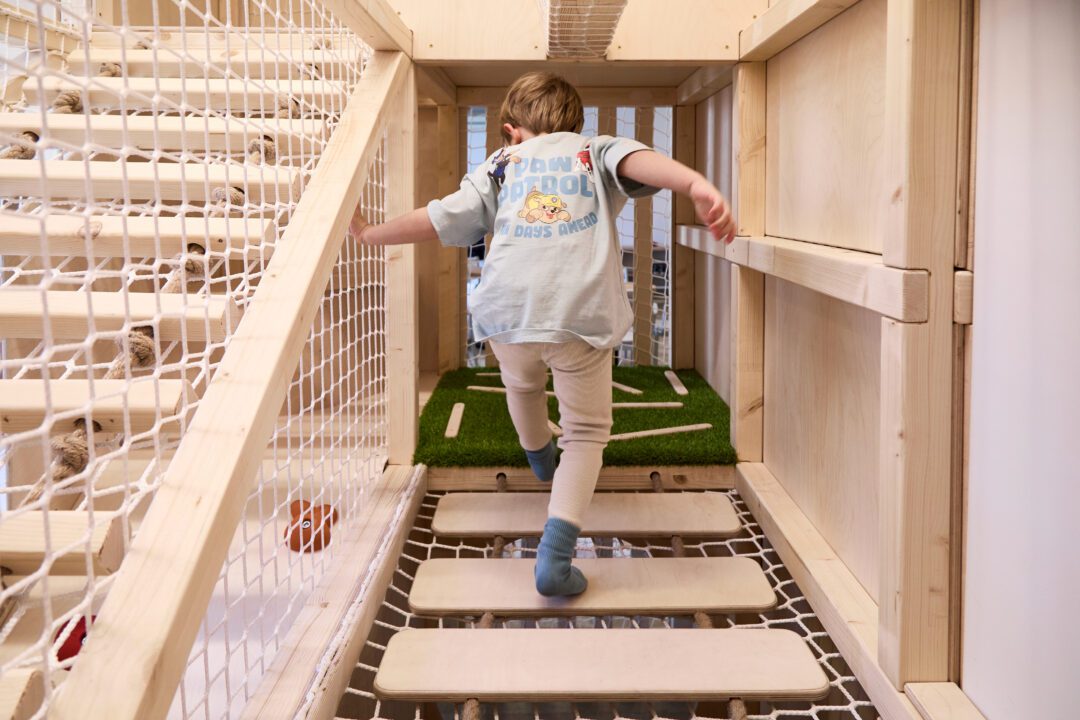
Minimalist playrooms with wood and soft tones reduce distractions, increase focus and spark imagination. One space can easily turn into a jungle expedition, a submarine, or a high mountain adventure.
3. Observation without interference – designing a playroom that builds independence
Montessori design avoids solutions that restrict freedom. Play areas should feel open but also give a sense of privacy. Architect Christopher Alexander described “children’s caves” – places scaled to kids, where they can observe without being fully visible to adults.
Natural jungle gyms often include such secret corridors, where children build their own bases. They feel safe yet independent, discovering the world on their own terms.

4. Safe environment = confident child
Trust grows in a safe playroom. Therefore, designing a playroom must follow certifications and safety standards like PN-EN 1176. Certified materials and stable constructions guarantee non-toxic and durable play areas.
When parents trust the safety of the space, children gain freedom to explore. This leads to greater independence, confidence and self-esteem.
What is a certificate of compliance? A certificate confirms that the materials used for building a playground – such as wood, paints or plastics – are safe, non-toxic and meet strict hygiene standards. In designing a playroom, these guarantees are essential, because they ensure that children can explore and play in a fully protected environment.
What is certification? Certification refers to the compliance of the entire playground structure with safety standards such as PN-EN 1176. It confirms that all equipment is properly designed, stable and poses no risk to users. In designing a playroom, certification provides parents with peace of mind and increases the credibility of the play space.
Although certification is not always mandatory, it is strongly recommended. Having certified equipment significantly increases the level of safety and boosts the credibility of your offer in the eyes of customers. In designing a playroom, certified solutions show that you care about both child safety and professional standards.
When parents are confident that a playroom is completely safe, they no longer need to worry or constantly watch their child. As a result, the child can assess their own abilities and experiment with movement in secure conditions. In designing a playroom, this freedom is the path to building self-confidence and independence.
Stimulating imagination instead of replacing it
Overly themed playrooms limit creativity. A fairytale castle may look nice, but it stays only a castle. In contrast, abstract forms give endless opportunities – a labyrinth can become a spaceship, a forest, or a magical tower.
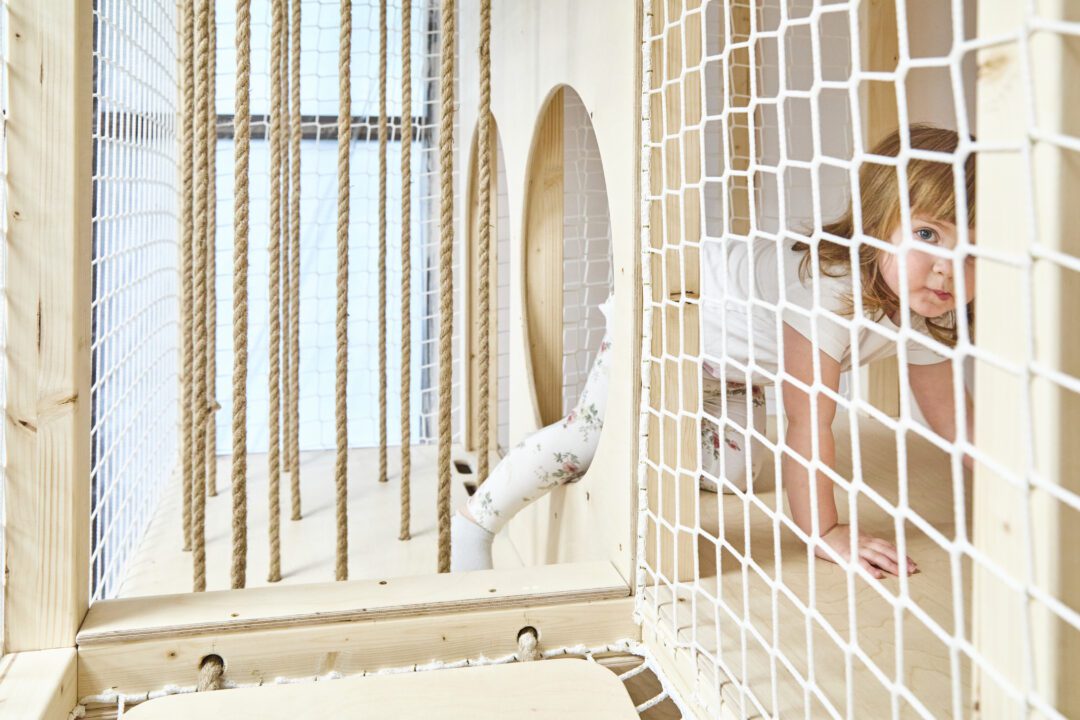
This is another strong argument for designing a playroom based on the principles of minimalism. Flexible forms and natural, muted colors do not impose fixed scenarios on children, but instead encourage them to experiment with imagination. In a space free from excessive stimuli, kids not only interact more freely with their surroundings but also develop the ability to creatively transform objects according to their own ideas.
Designing a Playroom – how our approach fits Montessori
Designing a playroom is more than filling spaces with toys. It is about building an environment where kids develop naturally through engaging play. Our natural jungle gyms allow children to discover that the world is endless exploration.
Kids show us the way – their needs, creativity and ideas inspire our designs every day. That is why our playrooms engage children in hours of safe and developmental activity.
Book a free consultation now and find out how to design a natural playroom perfect for little explorers!


