Too much screen time, too little movement. How does an indoor playground flip that balance for kids?
12.11.2026A family lunch at a restaurant. The parents want a moment to talk, and the child, being a child, starts to fidget. The quickest, easiest fix is to reach for a phone and hand over some entertainment. Suddenly it goes quiet, but that quiet comes at a price. Kids don’t pick a screen because they want to sit still. They pick it because there’s often nothing more interesting around them. A well-designed indoor playground can change that. Too much screen time and too little movement is a balance you can flip, as long as kids get something more exciting than a cartoon on a tablet. In this article, we show how we design spaces that can win against the screen.
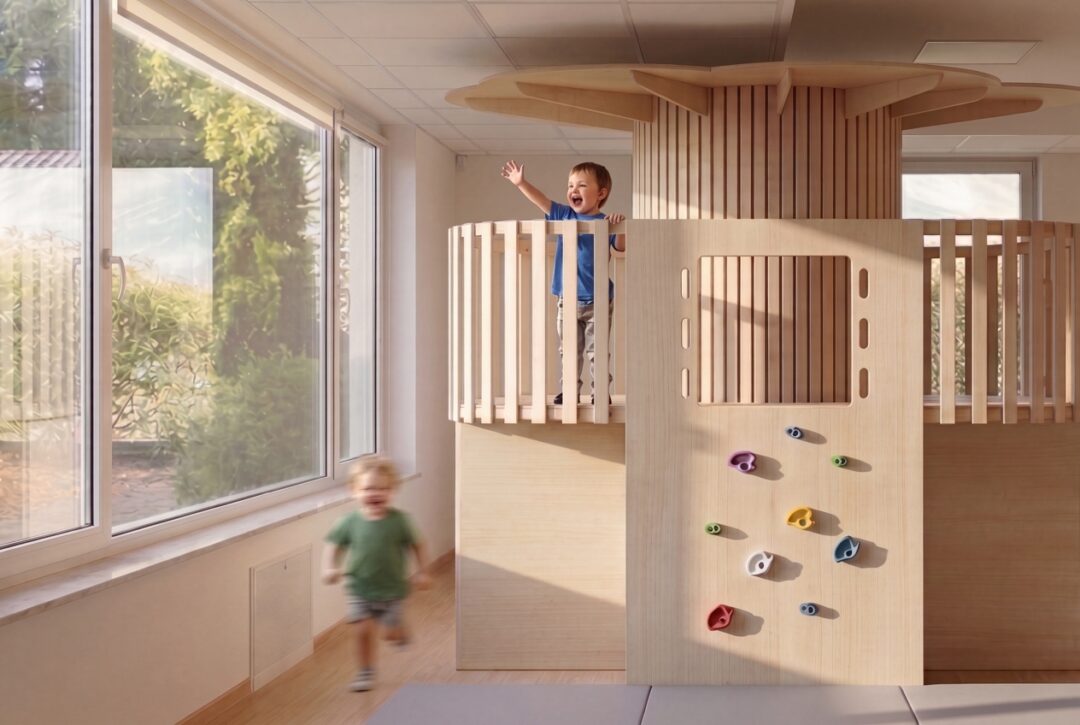
Kids are moving less and less
The World Health Organization recommends that children and teenagers aged 5–17 get at least 60 minutes of physical activity a day on average, at moderate to vigorous intensity. For children aged 2 to 4, the WHO recommends no more than one hour of screen time a day. According to the same organization, most teenagers worldwide don’t meet the recommended activity levels.
Behind these numbers are everyday moments. Kids sit at school, in the car, at restaurants, and for much of the year they don’t go outside to play because the weather just isn’t inviting. In autumn and winter, outdoor play often wraps up after fifteen minutes, and when it rains, it doesn’t start at all. That’s when it’s easiest to reach for a cartoon or a game on a tablet, but there is another option. You can head somewhere with an indoor playground waiting for the kids, full of movement, silliness, laughter and challenges.
Screens give parents a moment of peace. But are they the only option?
So why are screens such a big problem? First of all, a child in front of a screen sits still, while their body needs to climb, balance, crawl and jump. Kids also need a sense of agency and independence.
That’s why we keep asking ourselves: what does a space need for a child to decide, on their own, that it’s more exciting than a screen?
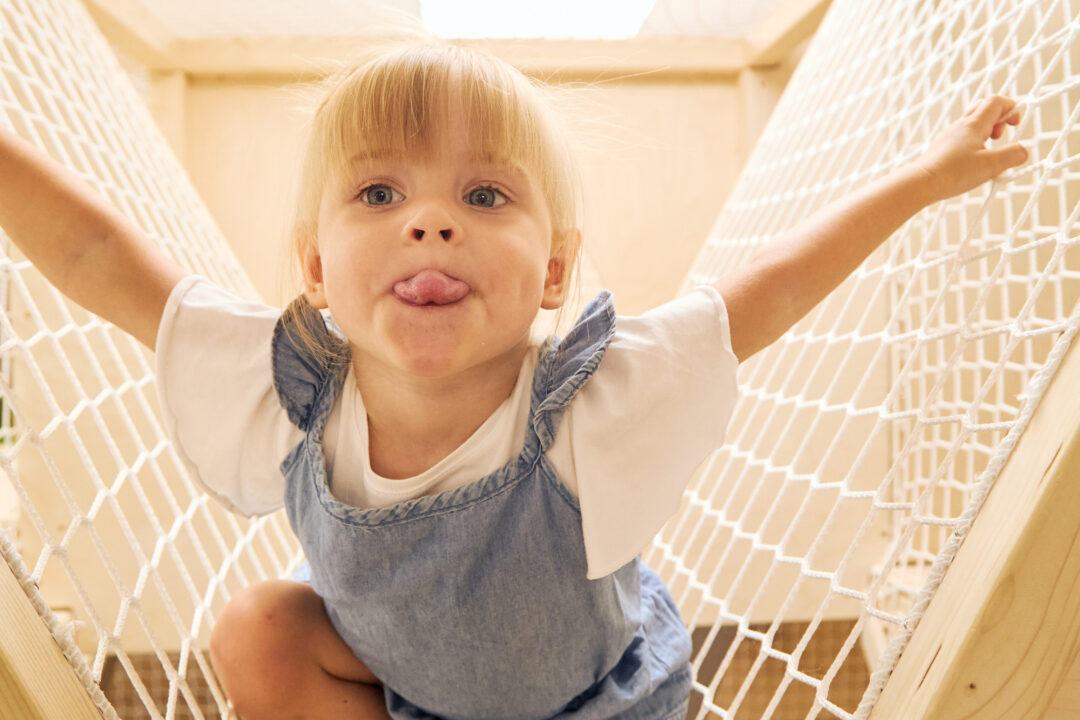
How we design an indoor playground that beats the screen
At Small Human Design, we believe kids are the best at showing us what they need. All it takes is watching them. That’s what guides us as we design wooden jungle gyms and complete indoor playgrounds for hotels, restaurants, play centers and event venues.
Age-appropriate challenge
If play is too easy, kids get bored fast. If it’s too hard, they give up. That’s why we split our play structures into zones with different levels of difficulty. Toddlers get lower, safe crossings, while older kids get higher, more demanding routes. Every child finds something they can conquer, and something to grow into.
That’s how we designed the playroom at the Saltic Grzybowo hotel, for example.
A story you can step into
A cartoon pulls kids in because it tells a story. A space can do that too. At Oranżeria Lubartów, children climb a wall straight up into the clouds, with a night sky stretching above their heads. It’s no longer just a ladder. It’s a real expedition and adventure.
Play without instructions
Our play structures are designed in the spirit of Montessori. They don’t tell children what to do. Instead, they invite them to explore and discover on their own. We design nooks, passageways, nets and rope mazes that can be used in countless ways. One day it’s a castle, the next a ship, then a hideout from a dinosaur. When kids make up their own games, they spark their creativity and play with far more focus.
Whole-body movement
A good indoor playground gets the whole body involved. In our designs, kids:
- climb, which builds strength and courage,
- balance on nets and bridges, which trains their coordination,
- crawl through mazes and tunnels, which develops their coordination,
- and plan where to put their feet and how to move on, which teaches them spatial thinking.
Kids don’t even realize they’re exercising. They’re just having a great time, and physical activity comes naturally as part of the adventure.
A calm, natural setting
Screens bombard kids with stimuli, and we don’t want a playroom to do the same. That’s why we work with natural, certified wood and muted colors that match the interior. Kids can run wild, but they don’t leave the room overstimulated.
Safety that lets parents relax
Parents can only relax when they know their child is safe. All our play structures are designed in line with the EN 1176 standards, and we use soft, impact-absorbing flooring in key areas, so parents can rest assured their little ones are in good hands.
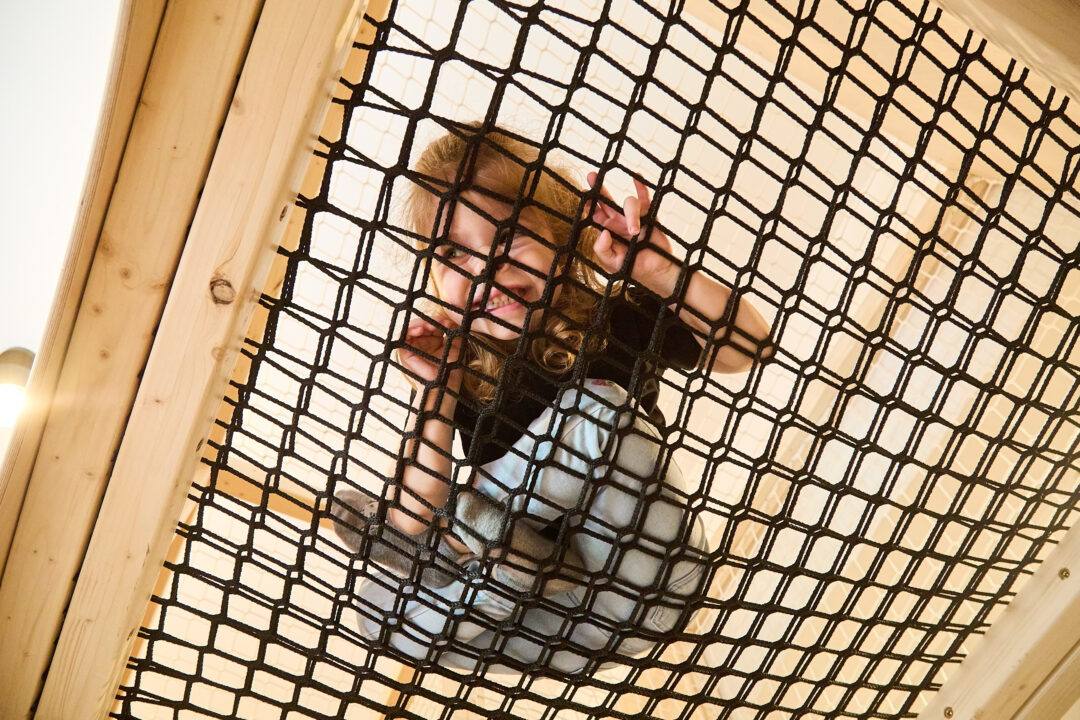
What can an indoor playground do for your business?
For a hotel, restaurant or play center, kids’ physical activity should be more than just a business add-on. A child who has something to do doesn’t drag their parents toward the exit. Families stay longer, enjoy their meals in peace, come back more often and leave with better memories.
An indoor playground works all year round, whatever the weather. When it’s raining outside and families are looking for somewhere their kids can burn off some energy, your venue already has the answer. That’s when parents choose you, and their reviews mention not just the food or the rooms, but also the safe, exciting space their kids had to play in.
Kids show us the way
We’re not here to fight screens. That’s not our role. We create places where kids forget about them on their own, because there’s something more exciting happening all around.
Want the kids at your venue to play actively and safely? Get in touch. We’ll design a wooden jungle gym or a complete indoor playground that fits your interior and your guests’ needs.


